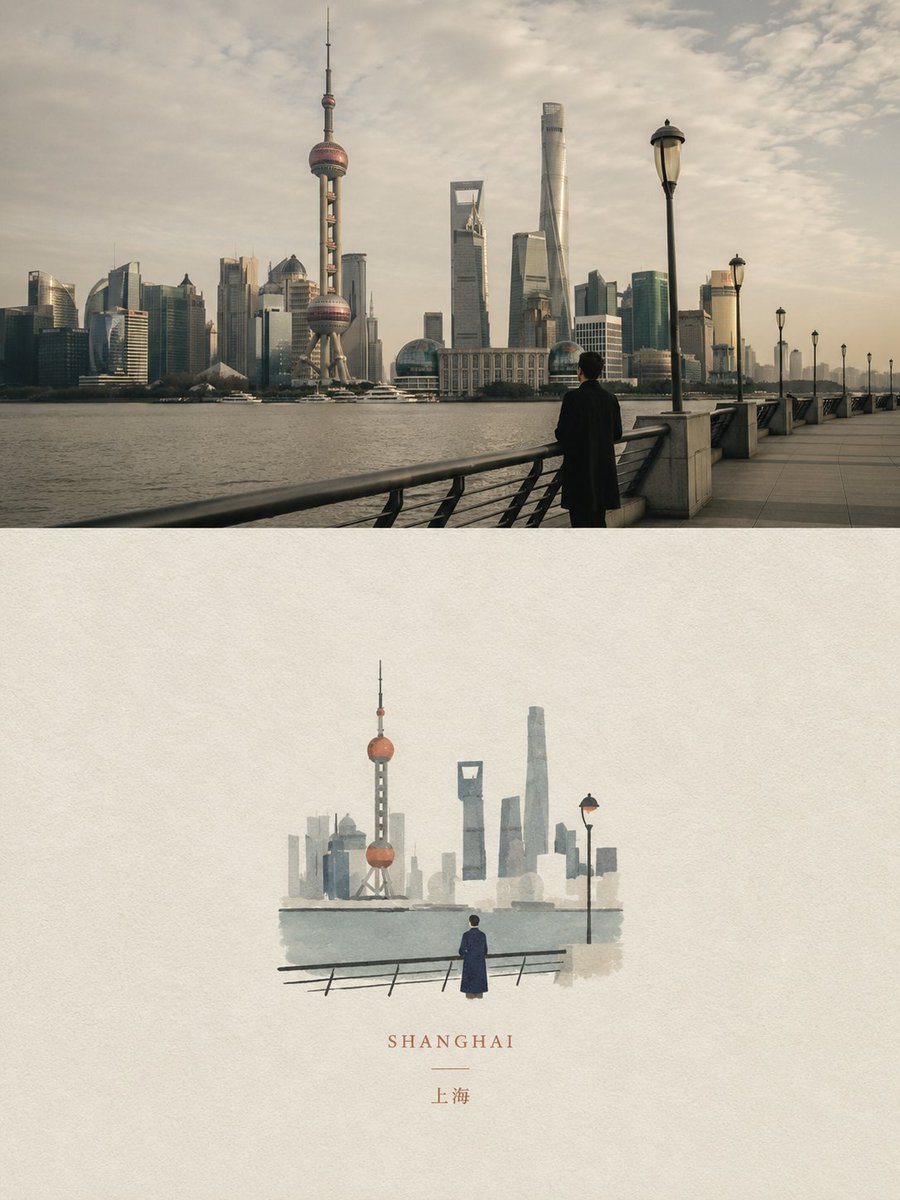
Create a high-end independent editorial poster in a strict 3:4 vertical aspect ratio. Divide the canvas horizontally into two exactly equal 50/50 sections, designed as one cohesive art-publication cover.

TOP HALF - EDITORIAL PHOTOGRAPH

Create an original photorealistic editorial photograph based on the chosen subject or scene. Establish a strong, recognizable composition with authentic lighting, natural shadows, realistic textures, atmospheric depth, and sophisticated magazine-style color grading.

Keep the photography natural, cinematic, and understated — like a premium independent magazine or contemporary art book. Avoid excessive retouching or artificial styling.

BOTTOM HALF — HAND-DRAWN PAPER ILLUSTRATION

Reinterpret the same subject and visual story as a small minimalist handmade paper illustration.

Preserve the key silhouette, recognizable features, essential objects, pose or gesture, and core narrative. Simplify the scene heavily, using delicate imperfect hand-drawn lines, a few bold acrylic-style flat color shapes, visible brush marks, rough paper grain, and slightly irregular organic edges.

Keep the illustration small and centered, occupying approximately 10–20% of the bottom half, with generous negative space.

Use a rough white, warm off-white, or pale natural paper background, with only a few minimal shapes or lines suggesting the surrounding environment.

COLOR & TYPOGRAPHY

Derive a restrained palette of no more than 4 harmonious colors from the overall scene. Use controlled flat color blocks with subtle handmade texture.

Optional minimal editorial typography may include a short title, keyword, location, year, number, or brief phrase. Keep it understated and naturally integrated into the negative space.

FINAL ART DIRECTION

Quiet, poetic, refined, minimal, innocent, relaxed, artistic, thoughtful, and premium.

The visual concept is: “A small subject surrounded by a large amount of empty space.”

Create a strong contrast between the photographic realism of the top half and the minimal handmade visual poem of the bottom half, while making both clearly belong to the same visual story.

Avoid: collage layouts, generic templates, commercial advertising aesthetics, excessive decoration, busy compositions, excessive typography, 3D rendering, glossy textures, cartoon styling, crayon, colored-pencil, watercolor bleeding, heavy oil painting, pure line art, or polished digital illustration.

Prioritize recognition, restraint, negative space, material texture, subtle imperfection, editorial sophistication, and storytelling.