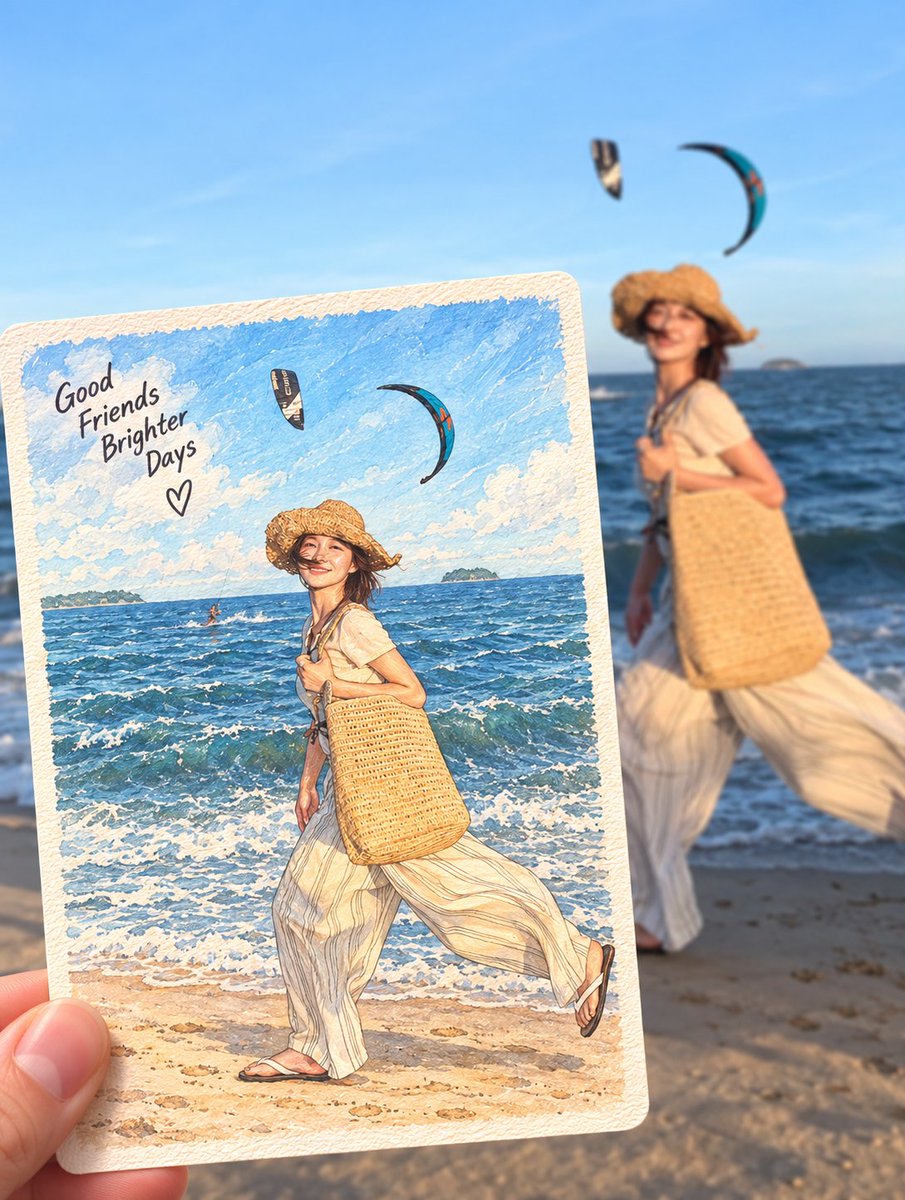
Use the attached image as the sole source for the scene, people, objects, clothing, pose, and overall visual context.

Transform it into a realistic smartphone photograph in which the original scene remains visible as a real photographic background, while a hand-held illustrated card is placed prominently in the foreground and partially covers the scene.

The background must remain photorealistic and recognizable as the same location and situation as the source image, but use a strong shallow depth of field: soft natural blur, realistic bokeh, subdued background details, and gentle optical defocus. Keep the broad composition, lighting direction, color atmosphere, and major subject arrangement from the source photo. Do not replace the background with a completely different environment.

In the foreground, show a single physical illustration card held close to the camera by a realistic human hand. The hand should enter naturally from the lower edge of the frame, with visible fingers gripping the card. Preserve believable skin texture, fingernail shape, contact shadows, perspective, and natural hand anatomy.

The card should have a slightly imperfect rounded-rectangle shape, softly rounded corners, a warm off-white paper border, subtle thickness, and a handmade physical appearance. It should be positioned in front of the camera and partially obscure the real background, as if someone is holding up a printed art card for comparison with the scene behind it.

Inside the card, redraw the main people, objects, and spatial relationships from the source image as a charming hand-drawn colored cartoon illustration. The illustration should depict the same subject matter and recognizable actions as the source, but in a simplified, playful, editorial picture-book style. Preserve important hairstyles, clothing categories, facial expressions, body language, distinctive accessories, props, and basic interactions when visible.

Use expressive dark ink outlines, slightly uneven organic linework, colored-pencil and crayon-like texture, visible paper grain, lightly rough hand-colored fills, simplified shapes, warm natural colors, and a deliberately handmade illustrated quality. The card artwork should feel like a personal travel sketch, memory card, or small printed comic illustration rather than a polished digital cartoon.

The illustrated version should correspond clearly to the real scene behind it, creating a visual contrast between photorealistic background and hand-drawn foreground card. The card artwork may simplify anatomy, facial details, background structures, and surface textures, but it must remain readable and semantically faithful to the source image.

Composition: portrait-oriented smartphone photography, close-up framing, the card occupying roughly the central foreground area, slightly below the center, with the real environment visible around it. Focus sharply on the card and the gripping hand; keep the background noticeably out of focus. Use natural perspective, realistic depth, subtle lens softness, and believable contact shadows around the card.

The result must look like one authentic photograph taken in the real world, not a flat collage or a graphic design mockup.

Avoid: a fully illustrated background, replacing the original location, a floating card, a perfectly digital rectangle, a glossy commercial poster, a clean vector illustration, photorealistic artwork printed on the card, excessive text, logos, watermarks, extra hands, malformed fingers, duplicated people, unrelated props, inconsistent perspective, harsh cutout edges, artificial drop shadows, extreme fisheye distortion, or an entirely blurred card.