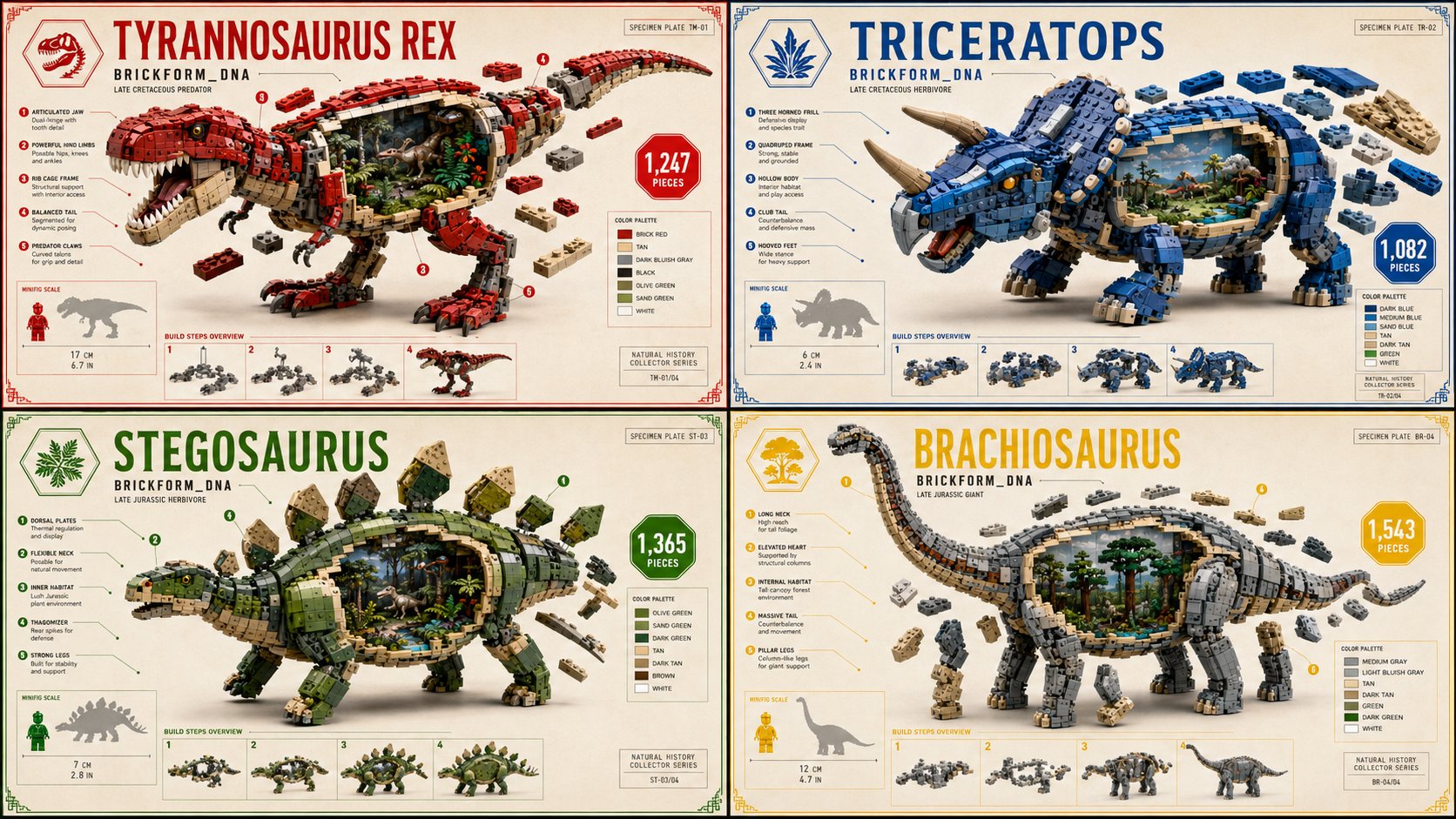
Brickform dinosaurs. These are highly experimental prompts, so you can technically adjust the settings. I decided to use it for dinosaurs:
class Brickform_DNA:     def __init__(self):         self.subject = "[CREATURE]"          self.parents = {             "composition_parent": "Exploded LEGO master-build hero, components suspended mid-assembly",             "material_parent":    "Glossy injection-molded ABS plastic with crisp stud tolerances",             "graphic_parent":     "Vintage natural-history museum specimen plate",             "atmosphere_parent":  "Toy-photography studio on a crisp seamless backdrop"         }          self.mutations = {             "semantic_mutation":    "Inside the creature, a tiny brick-built habitat shows where it lives and how it moves",             "information_mutation": "Numbered build-step callouts, part-count badges, minifig-scale reference, brick color legend",             "medium_mutation":      "Collector instruction-manual page on matte-coated paper",             "scale_mutation":       "Hero macro of the figure with microscopic stud-level detail"         }          self.color_dna = {             "base": "# F2EFE6",   "primary":   "# E3000B",             "secondary": "# 0055BF",   "accent": "# FFD500",             "glow": "# 7CD600"         }          # composition · material · graphic · atmosphere · mutation         self. style_mix = [0.40, 0.22, 0.23, 0.10, 0.05]      def generate_subject(self):         subject = """         [CREATURE] as a premium hero object, partially exploded into         components. Reveal materials, internal mechanisms, construction         traces, surface finish, signature features, and a miniature world         inside showing its origin, use, and meaning. If details are         missing, infer plausible premium materials, construction logic,         and visually distinctive components.         """         return render(             subject,             format="vertical collectible specimen poster",             title="BRICKFORM_DNA",             subtitle="BUILT FROM 1,247 PIECES",             palette=self.color_dna,             constraints="premium, precise, bold saturated color, "                         "minimal clutter, sharp focus, no watermark"         )