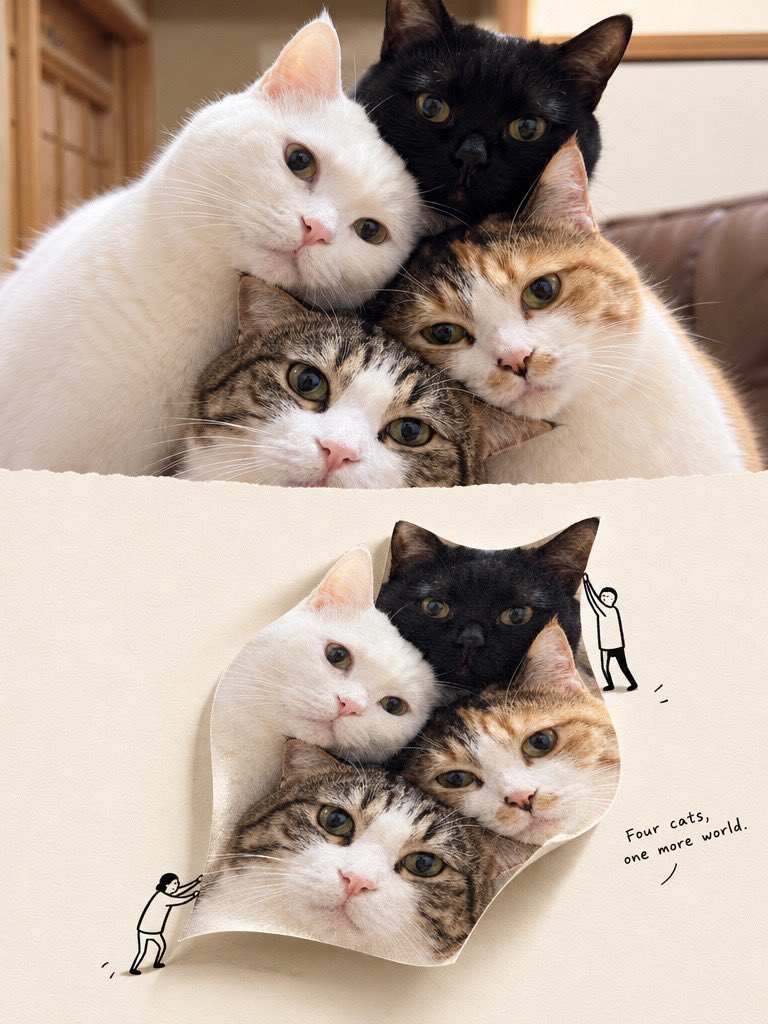
Create a vertical 3:4 “Second World” editorial photography poster based on the uploaded photo.

### COMPOSITION
Divide the image into two perfectly equal horizontal halves.

Upper Half: Preserve the original photograph exactly, allowing only proportional cropping. Keep the original subject, colors, composition, natural lighting, and realistic textures. No redraws or illustrations.

Lower Half: Use a warm ivory-white paper background with generous negative space.

### CORE CONCEPT
Identify the photograph’s most recognizable visual structure and transform it into a tangible, three-dimensional photographic object in the lower half.

The object must retain the original photographic textures and look physically real, with visible thickness, subtle folds or curves, natural shadows, perspective, and realistic contact with the paper.

Subject preservation is essential: If the photo contains a recognizable person, building, animal, landmark, or distinct object, make it the centerpiece of the lower half. Preserve its identity, realistic texture, and most of its complete silhouette. Never replace the main subject with background elements.

The lower half must clearly display a substantial photographic object, not merely torn paper or a tiny character.

### CHARACTERS & CAPTION
Include 0–2 minimalist black line-art characters interacting meaningfully with the photographic object, such as lifting, unfolding, pushing, repairing, or entering it.

Add one short, casual, slightly humorous handwritten English caption. Avoid motivational quotes and clichés.

### VISUAL STYLE
Realistic photography + warm ivory paper + minimalist black doodles + subtle handmade collage + independent magazine aesthetics.

Keep the design clean, bright, minimal, and visually striking.

### AVOID
Full-image illustration, generic torn-paper templates, tiny decorative characters, unrelated ornaments, clutter, complex illustrations, and commercial aesthetics.

FINAL RULE: The lower half must feel like a real, three-dimensional piece of the original photograph brought into a second world. The main subject must remain immediately recognizable at first glance, even if its physical properties are creatively transformed.